
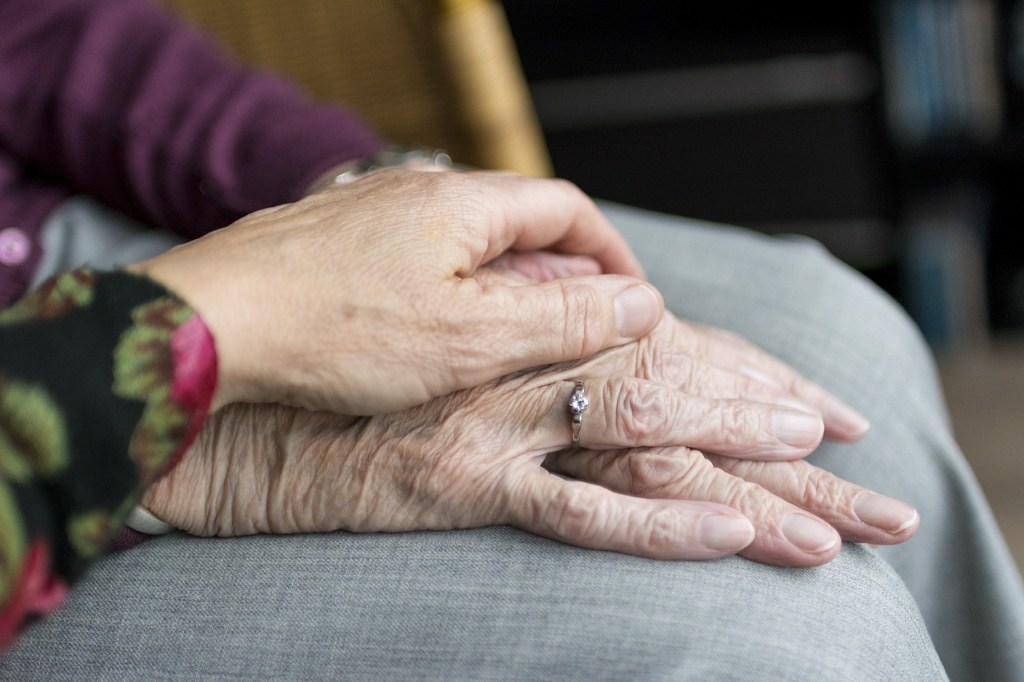
You ask them if they’re OK, and they say they’re fine, but are your elderly parents hiding the truth? Quite often, they will. It must be incredibly difficult to admit to one’s grown-up children that one isn’t coping. It’s hard enough admitting it to oneself.
There’s also “fear factor” involved. Change isn’t easy, and your parents might be wondering just what will happen if you were to intervene in their lives. Will you introduce strangers into their home? Will you start placing pressure on them to move into an aged-care facility?
Finally, there’s the question of “being a burden.” You’ll hear that from many elders. They don’t want you to worry about them. They don’t want you to use your resources and time to support them. So, if you’re expecting your elders to tell you when they’re struggling, you may never hear the truth.
Whatever the reasons, old folks don’t like to tell their kids they need help, so finding out might be more than just a matter of asking if they’re OK. If you’re worried about your parents and want to know the truth about their circumstances, there may be only one way to find out: see for yourself!
In this post, I’m going to speak from personal experience, so expect me to sound at least a little impassioned. Why am I sharing this? I’m hoping it will help you, and since looking out for the folks has been a big part of my life, I’m hoping it will help you and your family too. Let’s dive in! Here are some of the things you need to look out for when deciding whether it’s time to intervene in your elders’ lives.
Bruises, Scabs, Scratches
Frequent minor injuries are a sign that your parents could be at risk. Their coordination is poor. They may be falling over and hurting themselves. You need to intervene before “little accidents” turn into serious injuries. To me, this was the big red flag that made me take a closer look at the folks’ ability to cope.
Mom, a Parkinson’s sufferer, was my primary concern, and sure enough, I only had to help her to get dressed once to see just how bad things were getting. She was one big mass of bruises and scabs. There was even an ulcer on her hip from repeated falls.
As for Dad, though I never got a look under his clothes, I could see band aids on his arms and hands, and each injury came from a different “little accident.” Coping well? Obviously not!
Struggling With Simple Chores
Spending one day with your parents may be enough to tell you there’s trouble brewing. Don’t make it anything out of the ordinary. You’re just chilling out at their place for the day.
Don’t intervene unless they’re in danger. Just let them do things their way. Are they forgetting pots on the stove? Does something as simple as doing the dishes seem like a massive effort? Can you see signs of neglect around the house?
When I did this little exercise, I’ll admit to being horrified. Mom couldn’t even take the lid off a sugar bowl or pick up a knife and fork. I already knew that Dad was acting as her caregiver, but he seemed ill-equipped to care for himself, let alone a frail old lady.
Peeling a potato took him 30 minutes. Making an instant pudding was the work of an hour. Taking leftovers out the of the fridge and dishing them up took 45 minutes, and he got terribly stressed out and grumpy in the process. Making the bed took a full hour. I was looking at two very unhappy campers!
Lack of Mental Clarity
As we age, our minds slow down. There’s nothing wrong with that in itself, but it can mean impaired judgement, forgetting important things like meds and doctors’ visits, and slowed reactions that could translate into physical danger.
For a long time, we had known that Mom’s meds sometimes caused her to see things that weren’t there, but a full day in her company revealed symptoms of full-blown dementia. Some of her hallucinations were downright worrying – not the kind of thing that anyone would like to see.
Others were more benign, but nonetheless incomprehensible to me. Often, I’d see why she misunderstood sensory inputs, but she imagined things based on her current mood, and some of them were way off base. It’s sufficient to say that she was off “playing with the fairies” and not all of those fairies were pleasant.
As for Dad, he had trouble making the simplest decisions, was extremely forgetful, and quickly became impatient with his poor wife. Who can blame him? He was struggling himself. Apart from battling to get simple things done, he also struggled to find words. There was the vertigo, too. And he was driving a car with that. If you have noticed things like this, it’s probably time you did something to help, even if your parents don’t welcome it.
A Depressing Diet
If you don’t have several days to evaluate what your parents are eating, a quick look around the kitchen should help you to make the call. Is there more canned produce than fresh food? Is just about everything “quick” or “instant” processed junk? It could be a sign of trouble!
While elders are less active and can get away with eating fewer calories, their ability to absorb nutrients from food isn’t as good as it once was. They may also have less appetite and eat smaller portions. That means that what they do eat should be nutrient-dense. Ever heard of “empty calories?” That’s just what they shouldn’t be basing their diets on!
Needless to say, I found the folks’ diet incredibly depressing, and yes, their grocery cupboards bore testament to a very poor diet. Dad used to try and cook at least one thing a day. Perhaps it would be frozen meat patties on one day, gem squash on the next, and rice the following day.
He always made enough to last several days, so that he could stretch the meager results over several meals supplemented with tinned food, all of which they ate cold, served on side plates.
Over-Estimating Their Abilities
With time, we become less able to do the things we once took in our stride with ease, and for elders, this can pose real risks – especially when they don’t want to admit to themselves that times have changed. Here’s what I found.
Dad’s reaction times were poor and he suffered from vertigo, yet he still wanted to drive the car. Both Mom and Dad would undertake forays into the city that lasted all day, leaving them both in a state of utter exhaustion. It would be days before they recovered. Sometimes, mom would come home covered in bruises and contusions from yet another “little fall.”
Dad wanted to climb ladders even though he had moments when he struggled to keep his balance on level ground. Mom wanted to do the washing even though her condition meant that she could barely stand up without falling over and she couldn’t grasp a clothes pin. I could go on, but by now, you’ve got the picture.
If You’re Seeing Your Folks in This, Move as Slowly as You Dare
When you see that your parents aren’t managing to take care of themselves any longer, you may be tempted to dive in right away and take drastic action. While there may be times when this is an absolute necessity, limit your early interventions to what keeps them safe from harm.
Change is incredibly difficult for anyone, but especially for older people. The shock of it can affect their health and well-being to a dangerous degree. If it’s at all possible, avoid moving them to a care facility. There are multiple reasons why helping them to stay in their own home for as long as possible is the best solution.
In drastic cases, like the one I uncovered, start by providing the care they need yourself, and if that’s not possible, employ a care-worker to do the job. It’s still a difficult change for them to adjust to, so be ready for resistance and the occasional spat. Patience wins through. Stay positive.
Edit: My Journey With Them is Over
Revisiting this post is sad for me. Both Mom and Dad have passed on. Towards the end, Dad thanked me for all the happy days with his wife that he might not have enjoyed had I not stepped in.
Proper care improved Mom’s mental clarity, and massage and warm soaks helped her regain the use of her hands. When her time came, she went quickly, and with more dignity than many of us can hope for.
Though he initially fought me every step of the way, Dad was able to stay in charge while letting go of responsibilities that caused him untold stress. Within six months of Mom’s passing, he died in my arms, suddenly, and without physical suffering.
I’m glad I was able to devote so much time to them in their final years. It was an honor to be there for them, and I miss them very much.
 Andrea Durrheim
Leave a comment