
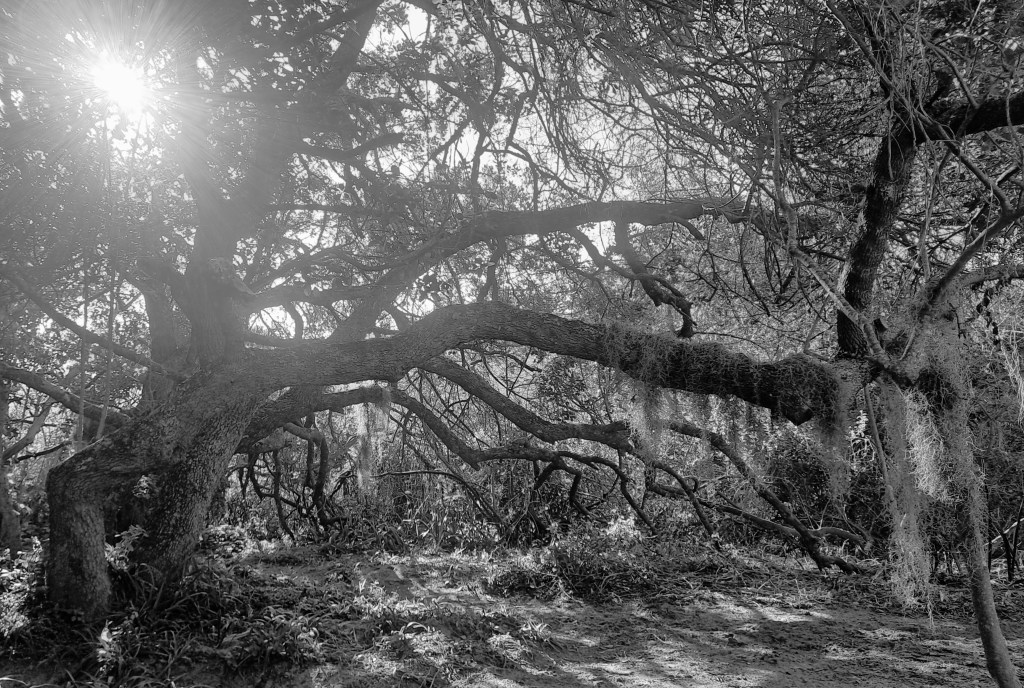
“It looks like my idea of hell,” I remember saying.
The lawn was a perfect expanse. The brick pathway was straight as an arrow, flanked by evenly spaced shrubs, geometrically pruned. A few bedding plants in precise, rectangular beds put on a brave show of color that somehow failed to relieve the monotony.
At the time, it was the perfect representation of what the average person thought a well-tended suburban garden should look like.
Now, it seems all that has been turned on its head.
It began as a whisper. It morphed into a fringe idea. And now, it’s all perfectly mainstream.
After 45 years as a gardener and 35 as a horticulturist, I think I might just be trendy at last.
Want to join the fun? Here’s how.
Limit Lawn
Lawn hater that I am, I’ll be the first to admit that walking barefoot on lovely soft grass can be a pleasure. For kids and pets, it also offers open space to play.
At the same time, one of the trends I can really get behind is the move towards limiting lawn space.
Do it. Here’s why.
Lawn is Hard Work
Maintaining a lawn takes effort, especially if you want it to be perfect. There are weeds to control. There’s the regular mowing. Top-dressing, aeration, fertilizer: I could go on.
A lawn is a worklist, and what you get in return is a flat expanse of admittedly toe-tickling green.
It’s Thirsty
The amount of water a lawn consumes is worthy of a special mention. According to the US Environmental Protection Agency (EPA), lawns can account for up to 30% of a household’s water use.
Meanwhile. We’re draining rivers and dams to create potable water, using massive infrastructure to deliver it, and then pouring nearly a third of this precious, increasingly scarce resource into nice, green lawns that are often barely used.
Well-Tended Lawns Are Expensive
Interestingly, the whole idea of lawns began partly as a status symbol. If you had a lawn, you could afford to pay someone to trim it with a sickle.
You also didn’t need all your land to serve a practical purpose. You could afford to leave some of it standing there looking cute instead of trying to make it productive, as peasants did.
It’s easier now, of course. But having a perfect lawn is still expensive.
You need the machinery and the energy to run it. Energy often means emissions, so that’s not very green. In fact, few things associated with lawns are “green” at all.
Harking back to medieval times, if you don’t have time to tend it, hiring a garden service to handle it for you is the obvious solution.
But it’s still part of nature, right? In case you were wondering, a lawn is probably the furthest thing from a natural meadow imaginable.
Healthy grazing land is usually diverse, with many species growing together. It is seldom evenly grazed. Some plants are palatable. Others aren’t. Pasture management is a science in itself, and it has very little to do with growing lawns.
Lawns are Very, Very Boring
There. I’ve said it.
A well-tended lawn is the most boring form of planting imaginable.
I love the other kind of lawn: the ones with lots of little wildflowers growing between the grasses. The ones that change with the seasons and roll with the punches. The ones that aren’t really lawns in the strictest sense of the word.
The New Trends are Informal
There are still formal gardens. And in a sense, I can feel the attraction of absolute control. Perfect balance. Something that says: “I am in charge of all this and, darn it, it will do as I say.”
I suppose formal gardens do have their place, especially around historical buildings you want to keep looking authentic. But most of us don’t live in places like that.
And trying to fight Mother Nature is tiring. She’s a big girl. She wins as soon as you give up the battle. If there’s one thing nature doesn’t do, it’s formality.
We already have perfect geometry in much of the built environment. We live in a highly controlled society.
Little rebellions are rewarding.
Informality is welcoming.
And I’m seeing more and more of it in the work of today’s landscape designers. It’s like a breath of fresh air.
Diversity, Diversity, Diversity
I get it. I really do. Mass plantings can be impactful. They can make a statement. They say things like:
“Look at this plant. You can be going 100 miles an hour, and you still won’t miss it. Isn’t it cool?”
But what I really love is slowing down. Finding surprises at every turn. Seeing different flowers at different times of the year. Enjoying the contrast between foliage textures and colors.
I’m not the only one who is happy.
Life loves diversity, and a lively garden provides a haven for birds, insects, and sometimes wildlife. Nowadays, I’m seeing designer gardens that look more like tapestries than walls.
They invite observation and engagement. They tell the story of the seasons.
Mix and Match With Abandon
Do you have a vegetable garden, an orchard, a flower garden, and a herb garden?
You don’t have to.
If plants are happy to grow together because they have similar requirements, there’s no need for segregation.
I especially love the way people are starting to recognize the aesthetic appeal of certain vegetables and herbs when they are mixed into the garden based on their requirements rather than their type.
Use thyme or lettuce to edge your pathways. Plant Swiss chard for the glorious color and texture of its leaves. Enjoy the visual appeal of vines laden with cherry tomatoes. And of course, graze away at them, too.
There’s plenty of potential here, and tons of creative ideas are coming from aspiring urban farmers in the gardening community.
Environmentally Appropriate
Do you hate begging plants to grow?
Sure, there may be a few specimens you’re willing to make an effort for. But having an entire garden that can’t survive anything nature throws at it is a recipe for disaster at worst and frustration at best.
What I’m seeing more of is people choosing plants that are right for their environmental conditions. Not just something that can grow in a certain location, but something that grows well without constant intervention.
Native plants are practically screaming to fit into this type of design, but I’m not a purist. Exotics that grow in environments similar to yours can be equally good choices. Just make sure they aren’t so happy that they become a problem.
Loving Those Insects
Back in the day, the nursery I worked at tried to lead the charge towards bee-friendly gardening.
But “attracts bees” led to a backlash in the opposite direction. “Attracts butterflies” worked a little better, but then people worried about nasty caterpillars.
Praise be! Most people have come to realize that insects aren’t necessarily a bad thing.
Sure, there are some we really don’t like. But a healthy balance means putting up with a few chewed leaves, something that buzzes, or the occasional caterpillar.
Instead of trying to wipe out every insect in sight, people are becoming a little more tolerant, saving interventions for specific problems, and even considering whether they should intervene at all.
It’s like having a mini nature park in your own yard.
And we’re much more sympathetic towards bees, in particular. We’ve even grown quite fond of them, as we should.
So, we’re seeing a new understanding of the need for things like bee-friendly gardens, and a much wider awareness that they’re a great idea rather than a murderous trap for the unwary.
Covering Ground
Back when I was a student, there was a certain disdain for “overplanting.”
Unless you were growing a hedge, you placed your plants so there would be bare space between them, and you could appreciate each one individually. Each was a sculpture in its own right and should be given plenty of space to develop its ideal growth habit.
Nowadays, we believe in covering the ground because it means fewer weeds, healthier soil, better water retention, and a chance for your plants to decide who wins the competition stakes.
Yes. Some plants will probably overgrow others in the end. And that’s OK. Plus, you can discover unrealized potential.
I’m enjoying watching a shrub that should only reach 1 m in height scramble up trees. It’s perfectly happy like that, and all my neighbors want to know what on earth it might be, especially when it’s in bloom.
Mulch is in fashion too. My grandmother, who was the first to teach me the “bare soil between plants” rule, would be horrified. She wanted to see the actual soil between each plant.
In her own way, she was a brilliant gardener. But she was an old-school aristocrat of sorts. She didn’t care how much work went into creating her idea of perfection, and she could afford to pay someone else to do it.
Gardening with Nature is On the Rise
In general, people are starting to see gardening as a way to work with nature rather than against it, and that’s progress.
There’s also a renewed understanding of soil and what makes for the down-to-earth basis of a healthy garden.
The basic principles remain the same as the ones our forefathers understood. Instead of hammering nature into the shape we think it should assume, we’re using it to make our task as gardeners easier while benefiting urban ecosystems along the way.
Let’s celebrate the end of mastery over nature – the perfect garden – and welcome nature’s beautiful chaos home.
 Andrea Durrheim
Leave a comment